Shadows of the Past
The rain hammered against the windowpane, a relentless staccato that echoed the pounding in my chest.
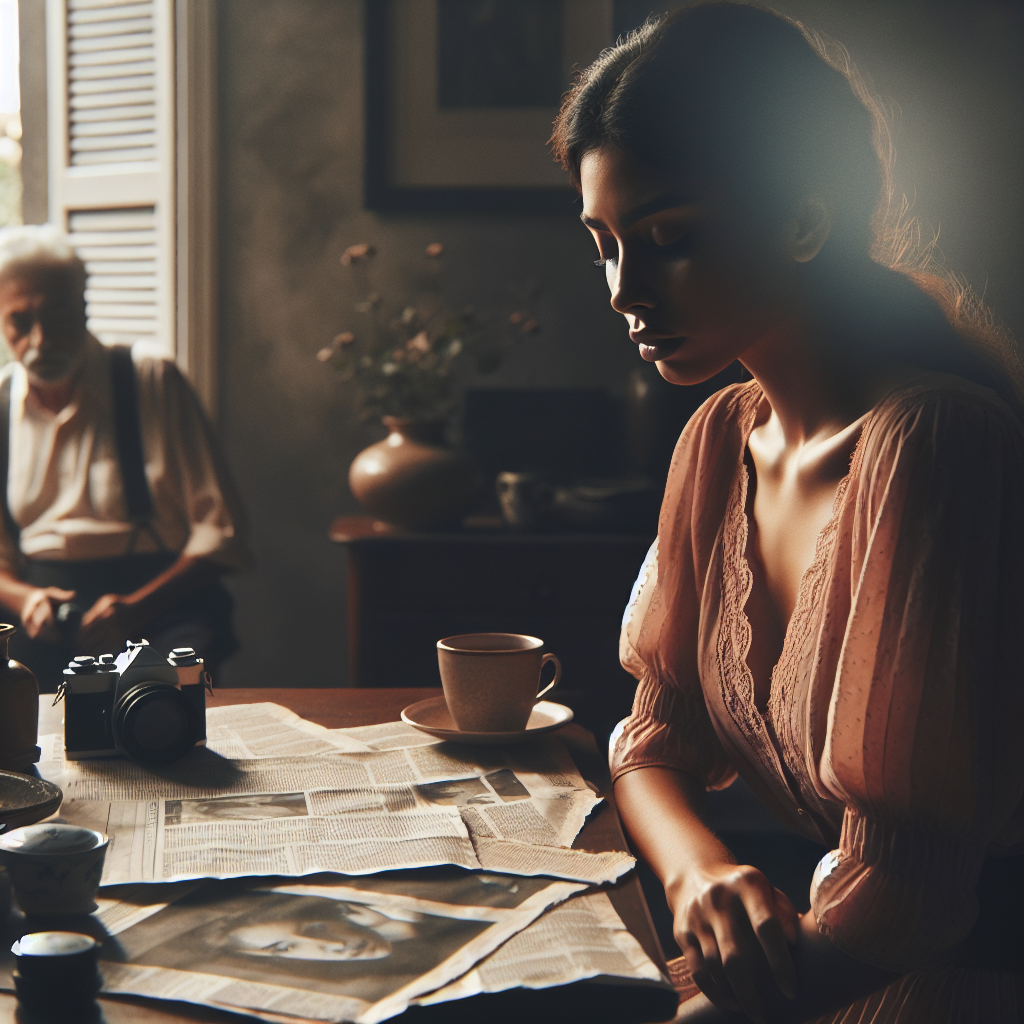
I sat in the dimly lit café, the one we used to frequent, my fingers tracing the rim of my coffee cup. The steam rose in lazy curls, dissipating into the cold air. It had been five years since I last saw him, five years since the betrayal that shattered our family. And yet, here I was, waiting for him to walk through that door.
The bell above the entrance chimed, and my heart leapt into my throat. But it wasn’t him. Just another stranger seeking refuge from the storm. I exhaled, the breath shaky and uneven. The weight of the letter in my purse felt like a stone, pulling me down into the depths of memories I had tried so hard to forget.
Before It Happened
Life was simple, predictable, safe. We lived in a small house on the outskirts of town, where the neighbors knew each other by name and the kids played in the streets until the sun dipped below the horizon. My father was a mechanic, his hands perpetually stained with grease, his laughter a deep, rumbling sound that filled our home with warmth. My mother was a teacher, her voice soft and melodic as she read bedtime stories, her touch gentle as she tucked the blankets around me.
We were happy. Or so I thought.
I remember the way my father would swing me onto his shoulders, his strong arms steady and sure. “Hold on tight, Maggie,” he’d say, his voice gruff but tender. I remember the way my mother would hum as she cooked dinner, the scent of her apple pie wafting through the house, wrapping us in a sense of comfort and love.
But there were whispers, too. Hushed conversations that stopped abruptly when I entered the room. The way my mother’s smile sometimes faltered, her eyes flickering with something akin to sadness. The way my father’s laughter sometimes rang hollow, his gaze distant and preoccupied.
I ignored them. Children have a way of seeing only what they want to see, of crafting their own realities from the fragments of truth they are given. I chose to see the love, the laughter, the warmth. I chose to ignore the cracks that were slowly forming in the foundation of our family.
The Moment Everything Changed
It was a Tuesday. I remember because it was the day before my twelfth birthday. I came home from school, my backpack slung over one shoulder, my mind filled with thoughts of cake and presents and the party my mother had promised. But as I pushed open the front door, I knew something was wrong.
The house was too quiet. The usual scent of dinner cooking was absent, replaced by a sterile, cold emptiness. I found my mother sitting at the kitchen table, her hands wrapped around a mug of tea, her eyes red-rimmed and swollen. She looked up at me, and the pain in her gaze stole the breath from my lungs.
“Maggie,” she said, her voice barely above a whisper. “We need to talk.”
I sat down, my heart pounding in my ears. She reached across the table, her hand covering mine, her touch cold and clammy. “Your father…” she began, then paused, her voice breaking. “Your father has been having an affair.”
The words hung in the air, heavy and suffocating. I wanted to scream, to cry, to run away and pretend I had never heard them. But I couldnated, my fingers digging into the wooden table, the pain anchoring me to the moment.
“He’s leaving us, Maggie,” she said, her voice steady despite the tears streaming down her face. “He’s leaving us for her.”
The Fallout
The days that followed were a blur of anger and tears. My father moved out, his absence a gaping hole in our lives. My mother tried to hold it together, but I could see the way she crumbled a little more each day. The whispers in town grew louder, the looks of pity and judgment more pronounced. We were no longer the happy family from the outskirts of town. We were the family that had been torn apart by betrayal.
I threw myself into school, into activities, into anything that would distract me from the pain. I stopped inviting friends over, stopped going to the café, stopped doing anything that reminded me of the life we had before. I built walls around my heart, brick by brick, until I was sure nothing could ever hurt me again.
But the pain didn’t go away. It festered, a dark and twisted thing that gnawed at me from the inside out. I became someone I didn’t recognize—angry, bitter, closed off. I pushed away the people who tried to get close, convinced that love was just a precursor to loss.
What I Learned—or Feared
Years passed. I moved away for college, then for work. I built a life for myself, one that was safe and predictable, one that didn’t involve taking risks or opening my heart. But despite my best efforts, I couldn’t outrun the past. It was always there, a shadow that loomed over me, a constant reminder of the pain I had endured.
And then, one day, I received a letter. The envelope was yellowed with age, the handwriting familiar despite the years that had passed. My father’s handwriting. My hands trembled as I opened it, the paper brittle and fragile beneath my fingers.
Dear Maggie, it began. I know it’s been a long time. Too long. And I know I have no right to ask for your forgiveness. But I need you to know that I’m sorry. Sorry for the pain I caused, for the years I missed, for the way I shattered our family. I was weak, and selfish, and I will regret it for the rest of my life.
The letter went on, his words raw and honest, his regret palpable. He talked about the affair, about the way it had consumed him, about the way he had lost sight of what truly mattered. He talked about the love he still held for me and my mother, about the way he wished he could turn back time.
But it was the last paragraph that truly broke me. I’m sick, Maggie. The doctors say I don’t have much time left. And I know I have no right to ask this of you, but I need to see you. Not to ask for your forgiveness, but to tell you in person how sorry I am. How much I love you. And how much I regret the pain I caused.
How It Ended (And What Stayed With Me)
I sat in the café, the letter clutched in my hand, the rain hammering against the windowpane. I had read the letter a hundred times, each time feeling the weight of his words, the weight of his regret. And despite everything, despite the pain and the anger and the betrayal, I knew I had to see him.
The bell above the entrance chimed, and this time, it was him. He looked older, his hair more salt than pepper, his face lined with wrinkles and regret. He saw me and hesitated, his gaze flickering with uncertainty. I stood, my heart pounding in my chest, and for the first time in years, I looked at him not with anger, but with sadness.
“Maggie,” he said, his voice gruff with emotion. “Thank you for coming.”
We talked for hours, the words flowing between us like a river, washing away the years of silence and pain. He told me about his life, about the mistakes he had made, about the love he still held for me and my mother. And I told him about my life, about the pain I had endured, about the walls I had built around my heart.
As I left the café, the rain had stopped, the sky clearing to reveal a pale, watery sun. I looked back at him, at the man who had once been my hero, who had once been the cause of my pain. And I realized that forgiveness wasn’t about absolving him of his mistakes. It was about freeing myself from the chains of the past.
The moral, I suppose, is this: Betrayal leaves scars, deep and jagged, that shape the person we become. But forgiveness isn’t about erasing those scars. It’s about learning to live with them, about choosing to let go of the pain and embrace the love that still remains. It’s about finding the strength to dance in the rain, even when the storm has passed.